Whether you’re designing a game room from scratch or reclaiming precious floor space in your living room, choosing the right game table makes all the difference. The choice comes down to a classic rivalry: board game table vs poker table.
Both can anchor a room, host memorable nights, and bring people together. But they’re built for very different worlds of play.
If you’ve ever debated whether to invest in a versatile board game table or to go all-in with a dedicated poker setup, you’re not alone. Let’s break down the real differences so you can decide which one best fits your style, space, and weekends.
Board Game Table vs Poker Table
Let’s clear up confusion before diving deep.
When we talk about board game tables and poker tables here, we mean the furniture itself, not the games you play. Each table type reflects a different approach to gaming, room setup, and even daily life.
-
Poker tables are designed for focused, single-game sessions, usually with a casino vibe.
-
Board game tables have to handle a wildly varied group (Eurogames, RPGs, puzzles, and the occasional big family meal).
While both are “game tables,” the details of their design, functionality, and flexibility are as distinct as the games themselves. This post will help you weigh:
-
Which table is a better fit for your typical games and group size.
-
How each table behaves in shared spaces versus dedicated game rooms.
-
Flexibility, function, and long-term value, so you avoid the most common buying mistakes.
Ready to match your hobby to the perfect table? Let’s get granular.
Core Design Differences
At first glance, a poker table and a board game table can look similar. A flat top, maybe some padded rails, and lots of seating. In practice, though, every detail, from the finish to the edge profile, affects how you play.
Playing Surface Construction
Here’s where core differences show up the moment you start a game.
Flat, Padded, and Recessed Surfaces
-
Poker tables: Usually a padded felt or speed cloth surface on a flat plane. This padding helps with picking up cards and sliding chips, but isn’t ideal if you need pieces to stay in place for hours.
-
Board game tables: Often feature a recessed vault (called a “play zone” or “pit”) lined with a durable, flat material like bamboo, felt, or neoprene. The lowered surface keeps boards and tokens in play during long campaigns.
Impact on Game Flow
-
Stability: A flat, hard surface keeps tiles and game boards from shifting. Recessed platforms limit spills and accidental bumps, especially key for marathon games of Gloomhaven or Twilight Imperium.
-
Card Handling: Poker players appreciate a soft surface, as it makes sliding chips and flipping cards smooth and silent.
-
Dice Rolling: Recessed tables catch stray dice. Flat, padded poker tables allow a satisfying bounce but might see a rogue die topple a neat stack of chips.
Why Recessed Vaults Matter
For modular or legacy board games, being able to save the game by covering the vault and resuming later is a huge advantage.
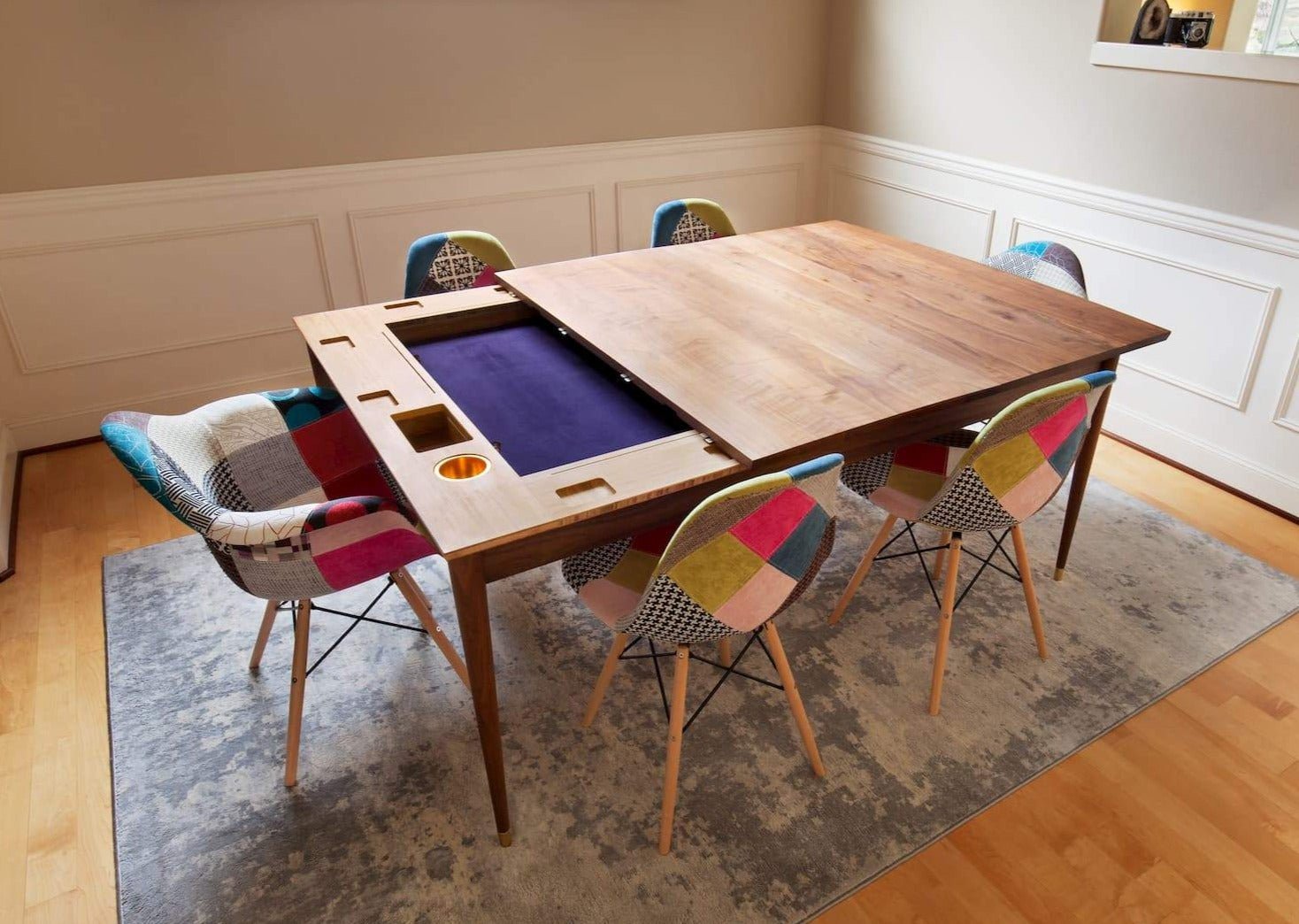
If you want to see this in action, the Dresden table shows exactly how removable dining leaves work with a recessed game vault.
Poker tables, in contrast, assume that set-up and teardown happen every night.
Table Shape and Geometry
Shape fundamentally changes how you interact with the table.
-
Poker tables: Most feature an oval or round layout, narrowing toward a defined “dealer” spot. This makes it easy for every player to have a betting arc, and for the dealer to control the game flow.
-
Board game tables: Rectangular or square shapes are more common, giving everyone enough space for big central boards and player mats.
How Shape Affects Play
-
Player Sightlines: A rectangular or square table keeps everyone facing the center, with equal view of the game board.
-
Reach to the Center: Ovals and circles minimize the distance to the dealer, while squares offer maximum reach for everyone (until the table gets too wide).
-
Component Access: Modular games, cards, dice, tokens all easier when table edges aren’t crowded by bulky rails.
Square Table vs Rectangle vs Oval
-
Square tables: Favor smaller groups and allow for symmetrical setups but can limit maximum seating.
-
Rectangular tables: Offer expanded central area but might force some players to stretch.
-
Oval and round tables: Ideal for dealing cards but can eat up space in a smaller room.
Rail, Edge, and Arm Support
Poker Table Rails
-
Made for marathon sessions, poker tables have wide padded rails. These give arm support, define the play area, and sometimes house cup holders or chip racks.
-
Comfortable, but can shrink usable play space, making them less friendly for component-heavy board games.
Board Game Table Edges
-
Prefer slim, unobtrusive edges to maximize table width.
-
Often integrate accessories (like cup holders or phone slots) as removable add-ons or external trays.
Tradeoffs
-
Rail = comfort for hands and elbows but eats into usable surface.
-
Minimal edge = more real estate for sprawling games, but less support during long sessions.
Intended Gameplay and Use Cases
The right table is the one that matches how you actually play, not what the marketing photos promise.
Poker Tables: Focused, Single-Game Play
Best for:
-
Poker (of course), blackjack, bridge, and casino-style card games.
Features that stand out:
-
Built-in chip racks.
-
Subtle betting arcs.
-
Clearly marked dealer space.
Poker tables center on a single, continuous experience, usually with everyone facing inward and cards front-and-center. Players typically remain seated throughout.
Limitations:
-
Not designed for board games or modular tile layouts.
-
Moving a large board game around chip trays and padded rails gets messy.
If you want more tips on hosting a poker night or making the most of this setup, check out How to Host a Poker Night.
Board Game Tables: Variable, Component-Heavy Play
Board game tables serve as the Swiss Army knife of entertainment furniture.
Designed to accommodate:
-
Board games, roleplaying games, strategy games, puzzles, family card games, and mahjong.
Advantages:
-
Ongoing games can stay setup for days, thanks to recessed surfaces and covers.
-
Flexible modular accessories let you choose cup holders, player trays, or storage bins as needed.
-
Enough space for player mats, cards, dice, and even snacks or rulebooks.
For a deeper dive into the board game table’s role in entertainment spaces, Are Board Game Tables Worth It? gives a solid overview of updated models and features.
Space, Room, and Lifestyle Fit
A table’s impact on your life goes beyond the hours spent playing. It’s also a question of how the furniture fits your space and routine.
Permanent Fixture vs Flexible Furniture
-
Poker tables: Often meant as permanent fixtures in a dedicated game room or basement rec room. The large footprint and limited multi-use potential make them best for rooms with single-purpose seating and minimal traffic.
-
Board game tables: Frequently serve double-duty as a dining table, work area, or kid-friendly surface. Removable top leaves and solid hardwood construction allow you to blend play and everyday life.
If your space is more flexible, multi-use tables have the edge. If you want more about fitting a game table into your lifestyle, Best Game Table for Basement Rec Room explores options for blending game and family spaces.
Shared Spaces vs Dedicated Rooms
Considerations for mixed-use living areas:
-
Can the table be repurposed for meals or crafts?
-
Will the setup need to fold away or stow?
-
Is the room mainly for games, or shared among kids, family, and guests?
Seating, Footprint, and Room Flow
Table design shapes not only gameplay but also daily movement and comfort.
-
Clearance: You need enough clearance for chairs and players to move comfortably, even with extra people at the table’s ends.
-
Table size: A too-wide table can cramp movement, while a narrow one limits play space. Square and rectangle tables are often more space-efficient in tight rooms than ovals or circles.
-
Footprint: Oval and round poker tables maximize seating for their width but can dominate small rooms, making flow awkward.
List for quick checks:
-
Count the number of regular players.
-
Measure available room space, leaving at least 36 inches around for chairs.
-
Consider how often the table will be used for functions beyond games.
Multi-Use and Everyday Practicality
Functionality rarely ends at midnight. The best game table adapts to non-gaming use more smoothly than most people expect.
Dining, Storage, and Daily Interaction
-
Board game tables: Many models feature removable covers that transform the playing surface into a dining table. The recessed zone underneath protects ongoing games, so you don’t rush to clean up.
-
Great for families, shared apartments, or anyone who wants their game room to double as an entertainment space.
-
Poker tables: Typically have few non-gaming uses. The soft padded surface and chip wells aren’t ideal for setting down dishes or working on crafts.
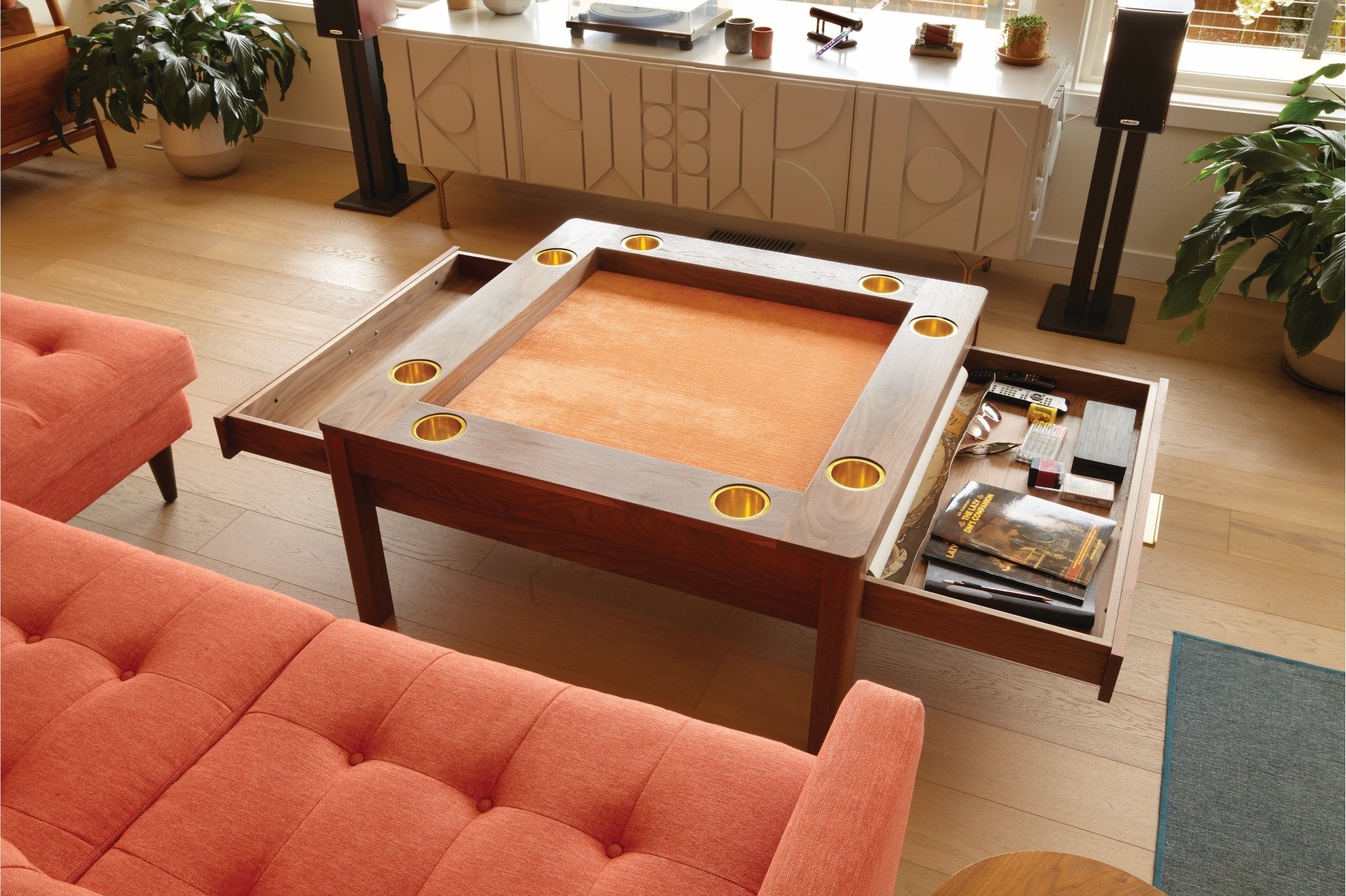
If you’re interested in online options, the Firefly blends coffee table vibes with dedicated play features, perfect for casual nights and everyday utility.
Storage and Accessory Integration
How does each table keep clutter down and accessories accessible?
-
Many board game tables come with built-in storage drawers, leaves, or external racks for storing cards, trays, and more.
-
Poker tables may have chip racks and cup holders, but usually lack integrated storage.
Managing a functional game room is easier when you have a table designed to store components or transition between games and meals without a mess.
Folding Card Tables: Are They Enough?
-
Foldable card tables provide a budget-friendly, temporary solution for game nights but rarely offer the durability or integrated features of dedicated board game or poker tables.
-
These are best for occasional play, small budgets, or spaces where permanent furniture isn’t possible.
Materials, Craft, and Long-Term Durability
Game tables are an investment. The right materials protect your wallet and your Sunday afternoons for years to come.
Hardwood Construction vs Upholstered Builds
-
Board game tables: Often built from solid hardwood (oak, bamboo, walnut), offering a premium feel, long lifespan, and the ability to refinish over time. Exposed wood resists spills and scratches, aging gracefully with regular use.
-
Poker tables: Rely on a padded rail and felt/vinyl/fabric playing surface. Soft surfaces can tear, fade, or absorb spills, making maintenance more crucial.
Resale Value and Long-Term Use
-
Hardwood tables retain value and can be re-sold, repaired, or upgraded.
-
Upholstered builds may wear faster, especially if food and drink are frequent guests.
For more about material choices and sustainability, read What is Eco-Friendly Furniture? to understand how to pick greener, longer-lasting options.
Surface Longevity and Maintenance
Let’s compare common surface options:
-
Bamboo: Durable, eco-friendly, easy to clean.
-
Felt: Classic for cards, but absorbs spills and can stain.
-
Neoprene: Resistant to water, holds color, ideal for family rooms.
-
Vinyl: Slick and easy for chips, but may crack with heavy use.
Cleaning and Care Tips:
-
Recessed or hardwood surfaces: Wipe down after each session.
-
Felt and fabric: Require regular vacuuming and light spot treatment.
-
Spills: Board game tables with covers protect unfinished games and the integrity of your investment.
Customization and Feature Depth
Not all game tables are created equal, and features can make or break the right choice.
Accessories That Affect Gameplay
Which Add-Ons Help, and Which Get in the Way?
-
Cup holders: Essential for long gaming sessions. Built-in types save space but may clutter if not needed.
-
Dice bins and trays: For rolling dice without sending them skittering across the room.
-
Card rails: Useful for tile and card games where hands need a break.
-
Racks and sorting trays: Make games go smoother, especially with kids.
Poker table accessories are purpose-built, designed for a specific game loop (chips, cards, dealer position). Board game table accessories, by contrast, shift to accommodate a huge range of play styles and genres.
For a breakdown of genre-specific accessories and when they matter, check Different Types of Game Tables.
Custom Sizing and Player Count
-
Poker tables generally seat a set number (six, eight, or ten), optimized for the flow of traditional hands.
-
Board game tables come in a wider variety of sizes. Easy to scale up or down depending on room, group size, or mix of adults and kids.
A board game table remains functional whether you have two players or a full group, thanks to flexible features and surface width.
Cost, Value, and Buying Tradeoffs
More than just sticker price, value is about function-per-dollar and long-term utility, not just the upfront spend.
Upfront Cost vs Utility Over Time
Poker tables:
-
Usually a lower investment.
-
Specialized for a single form of play.
Board game tables:
-
Higher entry point, but wider use and more features.
-
Can substitute for a dining table, work area, and centerpiece.
Common mistake: Optimizing for initial cost over long-term value. Many buyers focus on budget alone, only to outgrow their table or realize they need more flexibility.
Budget Ranges and Expectations
What you get at different price points:
-
Entry-Budget: Foldable card tables, limited accessories. Good for starters or small spaces.
-
Mid-Range: Simple hardwood board game tables, padded poker tables with cup holders and dealer spot.
-
Premium: Custom builds, storage built in, convertible surfaces, multi-use features, solid hardwoods.
“Affordable” is relative—a board game table might cost more upfront, but replace a dining table and gaming surface, saving money and space in the long run.
Real-World Examples of Board Game Tables
Stepping out of theory, here are some practical examples.
A Dining-Height, Recessed Board Game Table
Take the Dresden for instance.
-
Recessed bamboo playing surface.
-
Removable solid wood dining leaves.
-
Room for sprawling board games, RPG sessions, and daily meals.
Compared to a poker table, this setup means ongoing games don’t get lost to dinner, and dining leaves convert it into an elegant centerpiece. The design choices create a true hybrid between work, meals, and play.
See full details on the Dresden here.
Smaller-Format and Coffee Table Game Solutions
Some tables, like the Firefly, operate at coffee table height. These models work for:
-
Casual game nights in the living room.
-
Apartments or entertainment spaces that can’t hold a full-size dining table.
-
Mixed-use environments where storage matters.
Explore the Firefly if this sounds like your lifestyle.
Card- and Tile-Focused Tables
Not every household focuses on sprawling boards. Card games, tile games, and puzzles thrive on streamlined, organized surfaces.
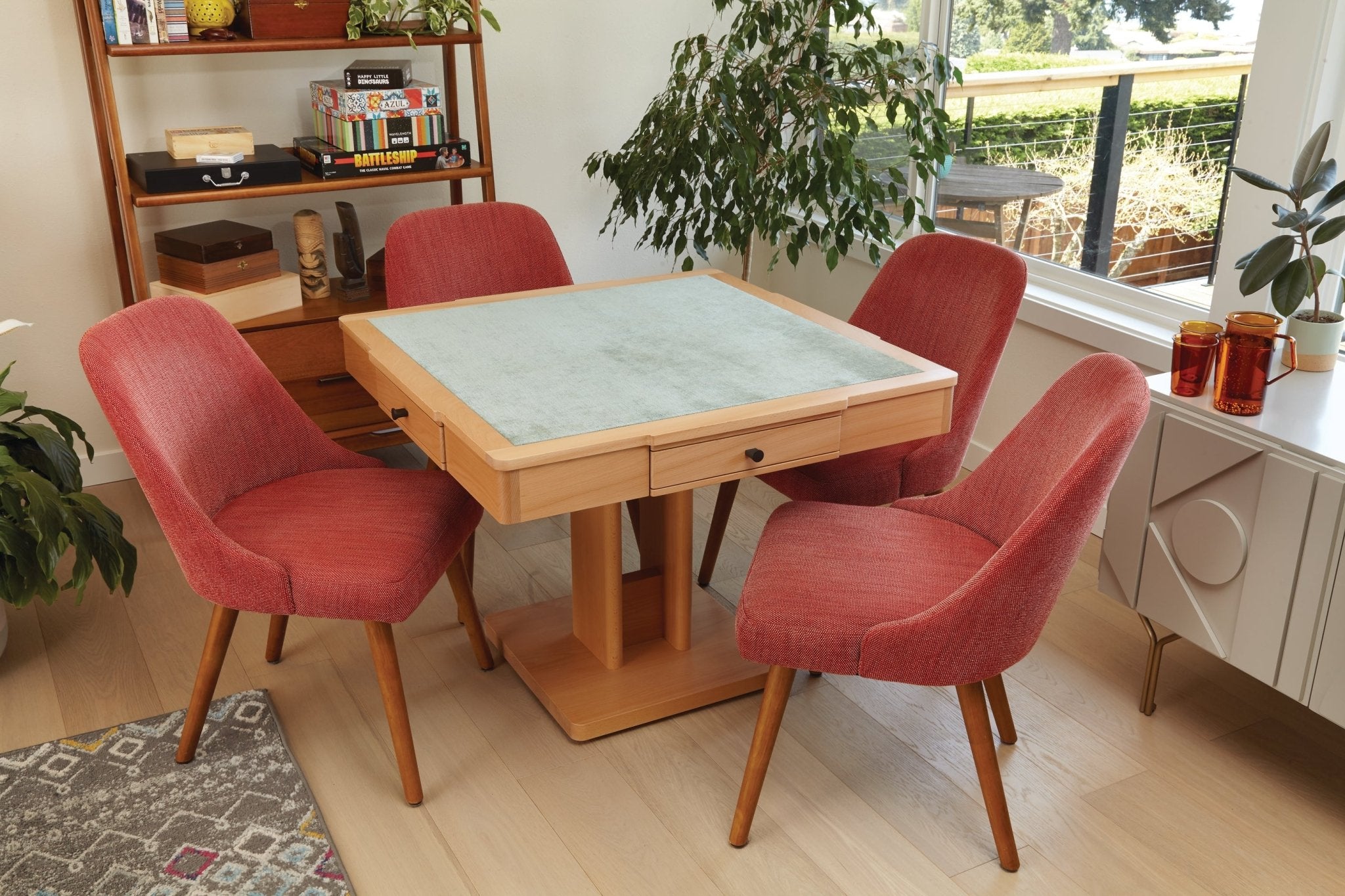
As a model, the Mimosa table combines a compact footprint with drawers for card storage and a surface that works for everything from mahjong to bridge.
Emphasis here is on making the most out of a smaller entertainment area, while keeping artful design.
How to Decide Which Table Fits You
Still not sure where your priorities land? Here’s a simple framework to clarify the right fit without pushing you in either direction.
Questions That Clarify the Right Choice
-
Which games do you play most often? If it’s poker (Texas Hold’em, blackjack), you’ll value some casino-specific features. For variety, board games, RPGs, puzzles, a more flexible table pays off.
-
How many players are in a typical session? Poker tables tend toward fixed counts; board game tables scale for small or large groups.
-
Will this table also serve as a dining or work surface? If yes, lean toward something with convertible leaves or recesses.
-
Does the table setup need to be permanent or stowable? Flexible use means board game tables with covers or modular trays are helpful.
-
Who else uses the space? If kids, family, or lots of guests are in the mix, durability and easy-clean surfaces matter.
Common Decision Pitfalls
Avoid these traps:
-
Buying for aspiration, not reality: Don’t trick yourself into a poker table if group board games rule your weekends (or vice versa).
-
Over-prioritizing style over usability: Flashy felt and rails look great, but consider how easy it is to clean, use, and repurpose the table.
-
Underestimating space needs: It's easy to misjudge the footprint, especially for square or round tables. Measure, then measure again.
More advice on avoiding mistakes is at Dedicated Game Room Table vs Convertible Dining Game Table: Which Is Better.
Conclusion
No matter your game nights’ flavor, knowing the crucial differences in the board game table vs poker table debate will help you invest in a piece of furniture that does more than just hold cards or dice.
Your table should reflect how you play, how you gather, and how you live. Whether it’s a permanent fixture in a devoted game room or a flexible hub in the heart of your home, the right table bridges the worlds of fun, family, and function.
So take stock of your space, your games, and your lifestyle. Your ideal game room centerpiece awaits.